0

Seoul Observes Car Free Day

Posted by Renddy Rose Rodriguez on 9/23/2008 06:52:00 AM
Only buses leisurely run on Jongno street in central Seoul which is normally crowded with cars during rush hours, Monday, the World Car Free Day. The campaign was simultaneously observed in about 2,000 cities in 40 countries across the world. / YonhapBy Na Jeong-juStaff ReporterPresident Lee Myung-bak rode a bicycle to work and Seoul's mass transit firms offered free rides to commuters during morning rush hours Monday as the city participated in World Car Free Day.Seoul closed public parking lots and blocked major roads in downtown areas to ``offer fresh air and jam-free streets'' to citizens.The city government spent millions of dollars to promote the day, but many still drove their cars to work, causing backups in central Seoul.

``President Lee and all Cheong Wa Dae staff refrained from using cars throughout the day,'' a presidential spokesman said. ``Lee arrived in his office on a bicycle while his secretaries took buses and subway trains.''Lee and his secretaries used a mini-van to get to Seoul Station and then a train to attend an event in Daejeon.Performances were held on the car-free streets.``Today, I took the subway for free and enjoyed fun events for free,'' said Lee Mi-jung, 23, who works at a shop in Jongno, central Seoul.
``Some people complain about the inconvenience, but it is meaningful to have this kind of day to raise public awareness about environmental protection.''The car-free day was simultaneously observed in 2,000 cities in 40 countries.
The campaign was created by the World Car Free Network, an organization dedicated to promoting alternatives to car dependence and automobile-based planning at the international level.The inaugural event was held in France in 1997 and was established as a Europe-wide initiative by the European Commission in 2000. It has since gone global.

|
0

Multitasking, Not Always the Best Choice

Posted by Renddy Rose Rodriguez on 9/23/2008 06:21:00 AM


Contrary to the common belief, multi-tasking is not the answer to accomplishing more things in a fixed amount of time. Rather than dealing with stress, it's time to switch back to an emphasis on doing one thing at a time and doing it well. It's possible to be productive, effective, and stress free by a disciplined approach to what you do and when you do it. Effective leaders make sure they are working on high priority tasks - the tasks are such that others can't do them, and they don't waste time. Adapt these techniques to be productive and stress-free.

Awareness: As with any life change, an important first step is awareness. For one week, keep a log of everything you do in a day and how long each task takes.

Prioritize: A key to stress free productivity is to work on important tasks to the exclusion of lesser tasks. Review the log of activities and identify those tasks producing the greatest benefit.

Avoid Interruptions: Interruptions are your enemy. Some interruptions are unavoidable, but not as many as you might think. For starters, don't allow self initiated interruptions, such as checking email or voicemail. Establish interruption-free periods of the day when you'll focus on the most important tasks and avoid email, phone calls, and in-person interruptions.

Establish Processes: Anything you do that is routine is a candidate for a highly efficient process. Trim unnecessary steps from routines and look for ways to automate, outsource, or delegate.

Empower Others: What do you do that others in the family or at work could do and would be willing to do? We often tend to underestimate the capability of others, seeing them as they were in earlier years when they were inexperienced and dependent. Practice these techniques, and you'll find yourself completing your tasks with lower stress, higher quality, and greater satisfaction.
VOCABULARY BANK

contrary

adjective opposite in nature, direction, or meaning.
productive
adjective achieving or producing a significant amount or result
discipline
noun controlled behavior resulting from such training; train in obedience or self-control by punishment or imposing rules.
priority
noun a thing regarded as more important than others.
adapt
verb become adjusted to new conditions.
log
noun an official record of events.
exclude
verb deny access to; keep out; remove from consideration.
identify
verb establish the identity.
interrupt
verb stop the continuous progress of; stop (a person who is speaking) by saying or doing something.
unavoidable
adjective not able to be avoided or prevented; inevitable.
automate
verb convert (a process or facility) to operation by automatic equipment
outsource
verb obtain by contract from an outside supplier.
delegate
noun a person sent to represent others, in particular at a conference; a member of a committee.
empower
verb give authority or power to; give strength and confidence to.
underestimate
verb regard (someone) as less capable than they really are.
inexperience
• noun lack of experience.

|
0

This Fall Is Expected to Be Clear and Mild

Posted by Renddy Rose Rodriguez on 9/23/2008 05:50:00 AM


According to the Korea Meteorological Administration (KMA)기상청, this fall is likely to be clear and mild. "Though summer saw frequent sudden downpours as well as heat waves, the weather in autumn will be clear and dry with large differences between morning and evening temperatures - a typical Korean autumn,"said Lee Man-je, head of the KMA.


The temperature is expected to be slightly higher than last year’s 8-19 degrees Celsius in September. High atmospheric pressure from the North Pacific will affect the Korean peninsula, bringing clear and mild weather.


October will see even drier and clearer days with the early morning and daytime temperature differences widening further. There will be some chilly days and the mountainous areas of Gangwo-do and Gyungsangbuk-do are likely to experience frost.

In November, there will be some cold days due to continental high atmospheric pressure. However, the weather will still be dry and mild. But the west coast and Gangwon-do could see some snow.

Also, one typhoon is likely to hit the peninsula. The KMA said there will be 9-10 typhoons in the northwestern part of the Pacific Ocean, one of which will affect Korea.

|
0

Table Manners From Around the World

Posted by Renddy Rose Rodriguez on 9/23/2008 04:31:00 AM

Our world is comprised of a great number of countries, an array of cultures and rich traditions. No two countries have the same customs which makes our world very wonderful, though perhaps also confusing . Well, confusing in what way? Have you ever traveled to a foreign country and been unsure of the customs and proper etiquette ? If you've ever been a stranger in another country, you may have found yourself embarrassed at times if you were unfamiliar with the local rules and customs. What is normal in one country may be viewed as totally disgusting in another country. Let's explore some table manners and etiquette from around the world!


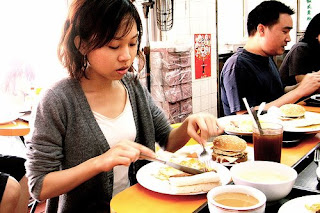
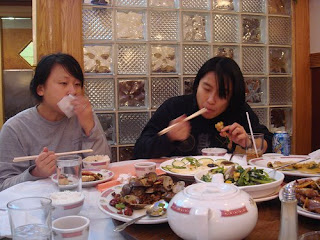
While eating meals, Koreans use chopsticks and a spoon. Most Western countries use a fork and knife at the dinner table. But have you ever given thought to which hand to use while you eat?

In India, people traditionally don't use any cutlery while eating their meals. If done correctly, eating with your hands is a technique that is not as messy as it may seem. In northern India, the food should only be touched with your fingertips , and is considered rude if it touches anywhere above the knuckles of your hand. Indians believe that eating with a clean hand is much more hygienic than eating with a fork or chopsticks. It is also believed that the diner can pay closer attention to the food and enjoy the meal more if they use their hands.

Let's now take a look at American dining etiquette. In America, it is considered very rude using your hands to eat, unless it is some type of finger-food such as pizza, chicken fingers or bread. It is stressed in American culture that you should not chew with your mouth open, nor talk while there is food in your mouth. Americans also think it is very rude if you rest your elbows on the table while eating a meal. Most Americans think it is important to wait until everyone is served before you start eating your meal. Lastly, if you don't finish everything on your plate, it is often a sign that you did not particularly like the food.

In France, adding condiments to a dish before even tasting it may be really insulting to the chef . Many French believe that condiments hide the taste of the meal. While eating in France, it is always polite to have both of your hands visible at all times. In French restaurants, it is often common for ladies to sit in the chairs with their backs to the wall, while men sit in chairs that face the ladies and the wall. When you've finished eating a meal in France, put your knife and fork on the plate together in the middle.

It may seem extremely confusing trying to remember all of the different customs and proper etiquette while eating. But if you ever get the chance to eat in a foreign country, don't be too nervous because you may just lose your appetite. People will most likely understand that you are from a different country and are unaware of their table manners. Perhaps they'll even try to teach you the customs of their country, and you can return the favor by teaching them some from Korea!
VOCABULARY BANK

array
noun an impressive display or range of a particular thing.
etiquette
noun the code of polite behavior in a society.
unfamiliar
adjective not having knowledge or experience of.
disgusting
adjective arousing revulsion or strong indignation.
cutlery
noun knives, forks, and spoons used for eating or serving food.
technique
noun a way of carrying out a particular task, a procedure that is effective in achieving an aim.
messy
adjective untidy or dirty.
knuckle
noun a part of a finger at a joint where the bone is near the surface
hygienic
adjective promoting or conducive to hygiene; sanitary.
condiment
noun a seasoning or relish for food, such as salt or mustard.
insult
verb /insult/ speak to or treat with disrespect or abuse.
chef
noun a professional cook, especially the chief cook in a restaurant or hotel.
visible
adjective able to be seen or noticed.
extreme
adjective to the highest degree; very great; highly unusual; exceptional.
unaware
adjective having no knowledge of a situation or fact.
favor
noun approval or liking; an act of kindness beyond what is due or usual.

|
0

Starting a Presentation

Posted by Renddy Rose Rodriguez on 9/22/2008 04:49:00 AM
In modern English, Presentations tend to be much less formal than they were even twenty years ago. Most audience these days prefer a relatively informal approach. However, there is a certain structure to the opening of a Presentation that you should observe.


Get people's attention
· If I could have everybody's attention.
· If we can start.
· Perhaps we should begin?
· Let's get started.

Welcome them
· Welcome to Microsoft.
· Thank you for coming today.
· Good morning, ladies and gentlemen.
· On behalf of Intel, I'd like to welcome you.

Introduce yourself
· My name's Jane Shaw. I'm responsible for travel arrangements.
· For those of you who don't know me, my name's Tom Stotter.
· As you know, I'm in charge of public relations.
· I'm the new Marketing Manager.

State the purpose of your presentation
· This morning I'd like to present our new processor.
· Today I'd like to discuss our failures in the Japanese market and suggest a new approach.
· This afternoon, I'd like to report on my study into the German market.
· What I want to do this morning is to talk to you about our new mobile telephone system.
· What I want to do is to tell you about our successes and failures in introducing new working patterns.
· What I want to do is to show you how we've made our first successful steps in the potentially huge Chinese market.
State how you want to deal with questions.
· If you have any questions, I'll be happy to answer them as we go along.
· Feel free to ask any questions.
· Perhaps we can leave any questions you have until the end?
· There will be plenty of time for questions at the end.

Of course, these are only suggestions and other language is possible. Even within this limited group of phrases, just choose a few you feel comfortable with and learn and use those.

|
0

COMMON MISTAKES IN ENGLISH

Posted by Renddy Rose Rodriguez on 9/18/2008 01:20:00 AM
Plans / A Plan

“Do you have any plans for the weekend?” is a very common North American phrase that you’re very likely to hear on any given Friday. “Plan” is always used in the plural (“plans”), and this expression means “What are you going to do this weekend?”

“Do you have a plan?” is used for when you have a specific goal in mind, and never to just ask about what someone is going to do during a certain time.

A: I am going to start a business.
B: What is your plan?
A: I will open a restaurant that sells the world’s best hamburgers.

Wrong: Do you have a plan for tonight?
Right: Do you have any plans for tonight.

Wrong: Do you have any plan for the weekend?
Right: Do you have any plans for the weekend?

…are you planning.. ...“What are you planning to do this weekend?” has the same meaning as “Do you have any plans for the weekend?” You can also use “…are you planning…” interchangeably with “Do you have a plan…?”, but need to add ‘on +verb-ing’ after planning to indicate the goal.

Ex. Are you planning to steal that girl away from her boyfriend?
Are you planning anything special for this weekend?

Partner / Keypal Activities- Do you have any plans this weekend?

|
0

Idioms- International List

Posted by Renddy Rose Rodriguez on 9/18/2008 01:20:00 AM
IDIOMS

1. A phrase that must be taken as a whole, usually having a meaning that is not clear from the meaning of the individual words, as hang around and a change of heart.
2. The use of particular words or of words in an order that is regarded as standard, the idiom is "wash up the dishes" but not "wash up your hands."
3. The language used by a people or group, in the scientific idiom.
4. a characteristic mode of expression in art or music etc.

Source: Oxford American Dictionary

idiom: To hang loose
meaning: To relax, to wait without anxiety, to take it easy in general.
usage: I got anxious waiting for her to call back, but I decided to just hang loose.

idiom: To get someone's drift.
meaning: To understand what someone is saying.
usage:
example 1:
A: Do you understand what I'm saying?
B: Yes. I get your drift.Example
2:A: Do you understand what I mean?
B: No, I'm sorry. I don't get your drift.

idiom: To screw up.
meaning: To make a mistake.
usage: I really screwed up.

idiom: To have egg on your face.
meaning: To feel embarrassed about something you have done.
usage: Oh no! I screwed up. I sure have egg on my face.

idiom: To bite the big one
meaning: to make a major mistake
usage: Sally really knows how to bite the big one.

idiom: to space-out, to feel spaced-out
meaning: To forget something, to be absent minded, to daydream
usage:
1) I couldn't sleep last night so I feel spaced out.
2) Sorry, what did you say? I just spaced out.
3) I'm feeling spacey today.

|
0

Dog Meat

Posted by Renddy Rose Rodriguez on 9/18/2008 01:20:00 AM
Koreans - Killing & Eating Dogs

Did you know that in Korea there is a practice of killing dogs for food. Dog meat is touted as being a substance which can boost the sexual prowess of men. The fact that this theory is absolutely false, makes no difference. A profitable commerce has been established.

The eating of dogs for food is not a new controversy for South Korea, as this photo from 1988 indicates. The photo originally accompanied a story on dog meat sales by The Sun's Lorrie Goldstein during the 1988 Seoul Olympics. The government banned the killing of dogs for food, in locations frequented by visitors, during the Olympics. They were afraid of upsetting Westerners visiting their country.

The Koreans who eat these poor dogs, take great delight in watching the poor animals die, wagging their tails in a last moment's desperate, but futile plea for mercy. It is believed the more the dog suffers in death, the better tasting the meat! Slow hanging and burning the hair off with propane torches is common practice. Cats receive equal treatment, shoved into sacs which are then smashed against brick walls until the poor animals are pulverized. Then they are liquified in blender machines and sold as drinks.

Something to Think About!
Dogs and man have been living together, helping each other, for more than 30,000 years according to anthropoligists. That represents about 1000 generations. Geneticists believe the figure is closer to 100,000 years.

They were dangerous times, 30,000 years ago. Man's weapons for hunting and protection were primitive and enemies were everywhere, two legged and four. Often, a dog's warning of danger was how a man survived. If a dog saved the life of its master 30,000 years ago, then all descendants of that man, also owe their existence to that dog. Supose a man had two children in each generation and that there have been 1000 generations since that time, it means that 2 to the power of 1000 or 21000 would represent the number of people today, who owe their existence to that dog. That number, 21000 is a number greater than all the people who have ever lived! Saving its master's life was common place until fairly recent times. In the last 300 years St. Bernards alone, have been credited with saving over 3000 people from snow avalanches in Europe. Think about how many people today owe their existence to those St. Bernards. Newfoundland Dogs, better not forget them, because over the decades they have saved countless children, adults, and shipwrecked mariners from drowning. It doesn't take a genius to figure that every man and woman on the face of this earth probably owes his/her existence to some dog, way back. Don't you think that dogs have earned special protected status, worldwide.

WHAT IS YOUR OPINION ABOUT THIS ARTICLE?

THIS ARTICLE IS CREATED BY:
http://www.dogbiz.com/dont-eat-dog-meat.htm

|
0

Useful Phrases

Posted by Renddy Rose Rodriguez on 9/18/2008 01:20:00 AM
Week 1
Bored to death

"I have nothing to do. I’m bored to death."
"I hate it when I’m bored to death."
"Would you rather be super busy or bored to death?"

A: "Hey Seth, what are you doing?"
B: "I’m reading book. What are you doing?"
A: "I’m bored to death. Let’s do something."
B: "Sure. Come over and we can play some games.

"Other Common Sentences
"I’m so bored, I could die."
"I’m dying of boredom."

You've got to be kidding

A: "Hey Jared. Mom told me to tell you that you shouldn’t stay out too late."
B: "You’ve got to be kidding me. I’m 30 years old."
A: "Patrick won the school election by two votes."
B: "He’s not that popular how did this happen?"
A: "Nobody voted because they expected Jason to win."
B: "You’ve got to be kidding me."

Other Common Sentences
"I really hope you’re wrong."
"Please tell me it ain’t so."

Sick and Tired

"I’m sick and tired of eating the same thing for lunch everyday."
"I’m getting sick and tired of this song. They play it way too often at this club."
"I’m sick and tired of listening to him nag all the time."

A: "Where are you going for lunch today?"
B: "I don’t know… how about a burger?"
A: "No. I eat that almost everyday. I’m getting sick and tired of them."
B: "Let’s go eat teriyaki then."

Other Common Sentences
"I’m getting sick of this phone. I think I’ll buy a new one."
"I’m tired of the same routine. I need to find something new and different."

Call it a day

"Let’s call it a day. I’m too tired to continue working."
"We can’t continue working without Mike, so let’s call it a day."
"It’s already nine o’clock. Let’s call it a day."
A: "How much more work do we have for tonight?"
B: "I think we finished everything for the day."
A: "Good. Let’s call it a day then."

Other Common Sentences
"Let’s turn in for the night."
"I think we should pick it up from the morning."

pick it up = continue

Get on one's nerves

"You’re beginning to get on my nerves."
"Will you please stop doing that? It’s getting on my nerves."
"His whining is getting on my nerves."
A: "He doesn’t like his birthday present."
B: "He’s starting to get on my nerves. It’s one thing to not like it, but it’s another to complain about it. We tried our best to get him a good present."
A: "Yeah. It’s bothering me too."

Other Common Sentences
"You’re beginning to annoy me."
"His complaints are starting to bother me."

|
0

The use of in, on and at

Posted by Renddy Rose Rodriguez on 9/18/2008 01:20:00 AM
in is used with:
years

in 1998

centuries
in the 19th century

parts of the day (exception: at night)
in the morning

decades
in the 1990s

seasons
in summer

months
in October

on is used with:

dates
on January 1, on May 2, 2004

days of the week
on Monday, on Sunday evening

“special days”
on my birthday, on Christmas Day

at is used with:

times
at 7:00, at midnight (12:00)

holidays
at Christmas, at Easter

no preposition is used with expressions with:

ago
one year ago
tonight, this morning, this afternoon, etc.
I'm going to see a movie tonight
tomorrow, tomorrow afternoon, etc.
See you tomorrow
yesterday, yesterday morning, etc.
I didn't go to school yesterday
expressions with last or next
I was in Japan last year

|
0

WORST PROBLEM IN THE WORLD

Posted by Renddy Rose Rodriguez on 9/17/2008 04:29:00 AM
1.) Choose the 3 worst problems the world faces today from the list below (or add your own ideas to the list) and number them 1, 2, 3.


International Terrorism


Overpopulation


Nuclear Weapons


Environmental Pollution


Destruction of Natural Resources


Drug Abuse


Crime


AIDS


2.) Give your 3 choices and state why you put them in that order.


3.) After each person has stated their choices and reasons choose the problem that you think is the worst and come up with solutions.


|
0

Finding a Fulfilling Happy Relationship

Posted by Renddy Rose Rodriguez on 9/16/2008 04:50:00 AM
Finding someone to be in a relationship is actually quite easy. Finding someone to be in a relationship that actually fulfills you, however, is a different story. So how do you find a relationship that truly fulfills your needs and desires? Setting your priorities straight and having realistic expectations will help guide you into the right direction in finding the relationship you have always wanted. Before you can do that though, you need to make sure that you feel fulfilled on your own first.


So many people end up in relationships that do not fulfill them because they are entering the relationship with the wrong expectations and for the wrong reasons. A big example of this is someone entering a relationship as a way to feel complete. Many people feel unsatisfied with themselves and their lives, and believe that someone else will be able to fill in that gap for them. Placing the responsibility for your happiness on someone else is unrealistic and will only result in disappointments in the relationship. You also need to acknowledge and accept the fact that there is no such thing as ?the perfect relationship? and that there will be issues that will require teamwork and compromise.


Most people have the idea that if a relationship is truly happy and meant to be, then there never will be any problems and should not require so much work- it should just be happy. Well, if this is how you view relationships, then it is time to change your way of thinking before you set yourself up for more painful reality checks. If you are interested in finding a person to build a strong romantic relationship with, the best thing to do would be to start by focusing on yourself first- and make sure that you are have your life sorted out, before deciding to share it with someone else. Majority of people would read this say ? of course, it?s common sense? and while this may true, people still enter relationship with unrealistic expectation, wrong reasons or before making sure they are fulfilled on their own first.


So if you feel you are ready to be in a serious, committed relationship, do your self a favor and take it one step at a time. Review the relationship you have with yourself first and make sure that you are truly happy with you are and where you stand currently in your life. Ask yourself why you feel the need to be in a relationship, what you are prepared to invest into it, as well as what you are expecting from your partner. Sorting this out will help you understand your relationship goals and will help you understand what it is you need to look for in a person when trying to find a romantic partner to share your life with.

http://www.love-sessions.com/fulfilling_relationship.htm

|
0
Posted by Renddy Rose Rodriguez on 9/16/2008 04:28:00 AM
Love, Lust and Romance what is the difference.

What is Love

All the beings in the world, mammals, birds, marine species, etc. have an in-born lust so that they are able to mate and reproduce. Reproduction is the only way to continue the existence of the species. As such, lust is a basic biological need.

For the male and the female to get attracted to each other as well as for the selection of the most suitable mate, romance is necessary. Both lust and romance are gender-specific and occur normally between a male and female. On the other hand, love is universal and love is neither gender-specific nor species-specific. A man could love a woman or another man or an animal or a bird. Love knows no bounds. Let us make a brief analysis on the manifestation of love, romance and lust in human beings and the resultant repercussions of each one of them.

Love is a tender but deep feeling of attraction towards a being or an object. Love is not limited to any one single thing. You can love your dog and at the same time, you can love your dress. Love is expanding by nature and the more you love, the happier you feel. It is very difficult to restrict love because it is a second nature for all of us. We cannot live without love. The reasoning is very simple. Our first love is we ourselves. Unless you love yourself, you would not be able to live. Think for a minute. Those who commit suicide do it only in that fraction of a moment when they hate themselves, whatever is the reason for that. Our personal love progresses further to include members of our family, relatives, friends, coworkers, neighbors, and others in our community. Love could be mild in nature or an intense one. The intense love or desire makes you obsessive and highly possessive of that person or object of your love. All our problems and conflicts start at this point only.


There is one more thing about love. Love does not get restricted to physical objects. Even our emotional aspects are part of our love. You say, ?I love swimming,? ?I love singing,? etc. We can love even physical and emotional activities. Many of us love to daydream about several things. This is emotional love.


In English language, so many idioms use love as their theme. A few examples are given below.

Love is blind
Make love
Puppy love
Labor of love
No love lost
Fall in love
Not for love or money
All is fair in love and war
Love at first sight

Diane Ackerman wrote, ?Everyone admits that love is wonderful and necessary, yet no one agrees on just what it is.? It is very difficult to describe love in words. To quote Barbara De Angelis, ?Love is a force more formidable than any other. It is invisible ? it cannot be seen or measured, yet it is powerful enough to transform you in a moment, and offer you more joy than any material possession could.?

While love encompasses everything, romance and lust occur normally between a male and female. Margaret Anderson said, ?In real love you want the other person?s good. In romantic love, you want the other person.? Romance is always considered to be a pleasant experience. Maximum numbers of novels are based on romance only. So are many movies and television shows. However, many romances end as a failure because the initial infatuation covers up the negative traits. Later on, when the knowledge of such negative aspects starts growing, disenchantment sets in. As such, for a romance to succeed, both the partners should be clear on what each one expects from the other. An open discussion on such matters makes understanding each other easier and results in a harmonious relationship. It is important to enjoy the companionship and remain relaxed in a romantic relationship.
Psychologists hold that romantic love emerges purely from a desire for self-gratification. They feel that the illusions that lead to romantic love are very powerful emotions and have to be properly controlled.

On the other hand, lust is a somewhat dangerous one because mostly lust is an intense feeling. Lust could be between human beings or you could even lust after money or other material objects. When one is in lust, normally the thinking cap slips off and the results could be disastrous. Hence, deep and clear analysis and understanding the nature of your lust is very much needed. Lust is also a desire for self-gratification but much more powerful than a romantic love. When you lust after somebody or something, your strong craving to get that person or object tends to make you transgress borders. Controlling the emotion of lust is very difficult. Most of the time, after you have attained the person or object that you lusted after, a guilty feeling sets in. Hence, proper restrain in needed when you have the feeling of lust.

QUESTIONS:
1. What is the difference of love, lust and romance?
2. Why do obsession and possessiveness can cause conflict in a relationship?
3. What is your own definition of love?
4. Do you believe that love can transform a person?
5. Do you think that romantic love are very powerful emotions and have to be controlled?
6. Will you still love a person even though you discover his/her negative traits?
7. Do you think that lust after money or other material things is the root of all kinds of evil or can harm others?
8. Is it possible to control the emotion of lust?
9. Have you ever felt lust with something?
10. Are you willing to break all boundaries/limitations just to get somebody or object?


http://www.love-sessions.com/love_or_lust.htm

|
0
Posted by Renddy Rose Rodriguez on 9/12/2008 02:01:00 AM
CHUSEOK (Korea's Thanksgiving Day)


Chuseok, the Korean version of Thanksgiving Day, is coming. Chuseok is one of the two biggest holidays in Korea. People from all parts of the country visit their hometowns. They hold ancestral memorial services with traditional foods. Kids dress up in traditional Korean dress that is picked out especially for the occasion.The main drawback to Chuseok is the horrendous traffic. The trip back home can take more than 10 hours by car, but people don't seem to mind the inconvenience. Instead, they look forward to seeing their families and friends.


Chuseok, also known as Hangawee, falls on the 15th day of the 8th lunar month and is one of the four main festive holidays of Korea. In ancient society, people used to worship and hold festivals under the full moon. It is said that Chuseok is derived from the full moon, which was on the 15th day of the 8th lunar month.


Dietary Customs


Chuseok is a period where wheat and fruits thrive. Yet during Chuseok, people mainly eat a rice cake called Songpyeon. Songpyeon consists of beans, adzuki, chestnuts, jujube and other grains, all picked from new crops.


CHUSEOK DISCUSSION
• What food do you eat at Chuseok?
• What day is Chuseok this year?
• Why is the traffic so bad?
• Where are you going for Chuseok?
• How many people in your family will be attending Chuseok this year?
• Do you celebrate Chuseok? If so, how?
• What do you know about the history of Chuseok?
• What foods are associated with Chuseok?
• What is your favourite Chuseok food?
• What are some Chuseok traditions?
• What are some Chuseok traditions in your family?
• Do you think Chuseok is a family holiday? Why?
• What does "Chuseok" mean to you?
• What day is Chuseok celebrated in Korea?
• What is your favourite Chuseok memory?
• What is your worst Chuseok memory?
• If you had to list your favourite holidays, what number would Chuseok be? Why?
• What did you do on Chuseok this year? What did you do last year?
• Who cooks Chuseok dinner in your home?
• What time do you start eating?
• Why do you think people celebrate Chuseok Day?
• What time of day does your family typically sit down to eat Chuseok dinner?
• What are some of the things you are thankful for?


PHOTO CREDIT
http://7ustm3.wordpress.com/2008/09/14/happy-chuseok/


|
0

Welcome!

Posted by Renddy Rose Rodriguez on 9/11/2008 07:12:00 AM
Welcome to our English class blog! I will start to post our

class materials on this blog so you can immediately access

our lessons.


PHOTO CREDIT

http://socialnetworking.lovetoknow.com/images/SocialNetworking/1/1f/Freebloglayouts.jpg

|

Copyright © 2009 English Lessons All rights reserved. Theme by Laptop Geek. | Bloggerized by FalconHive.