0

Real English Grammatical Clips from South Beach, Miami

Posted by Renddy Rose Rodriguez on 10/07/2008 07:09:00 AM
The SoBe Interviews "SoBe" is short for "South Beach' which is at the southern part of Miami Beach, Florida. It's a great place to videotape and meet people. It's one of those special places where you can feel the creativity in the air:

This topical clip is for Intermediate students.

Real English 55 - Women
by realdogswimming

|
0

CONVERSATION PRACTICE

Posted by Renddy Rose Rodriguez on 10/06/2008 06:06:00 AM
Ga$


Real Life
Intro


It’s all over the news in the US. But Americans don’t need the news to tell them that gas is more expensive than it ever has been. They can see it at every fuel station.But what Americans haven’t seen yet is fewer cars on the road. It will take time for people to adjust to the high price of gas (although fuel in Europe is still more expensive than it is in the US) and for cities to provide more public transportation. At the moment, people are feeling the increased costs, and everyone’s talking about it.

Jason: If I see one more headline with the phrase “at the pump” in it, I’m going to shoot somebody.
Beren: “At the pump”? Like, “Prices at the Pump…
Jason: “Prices at the Pump”
Beren: ...Blowing up
Jason:Pinched at the Pump.”
Beren: “Pinched at the Pump.” What’s another one?
Jason: It’s like, yeah, gas is expensive, I know. I’ve been buying gas, I can see that it’s expensive.
Beren: What’s kind of mind boggling though is that gas is so expensive but it doesn’t seem to be…at least here, it doesn’t seem to be affecting who’s driving. I see just as many cars now as I did before.
Jason: Back when it was half as much a few years ago, you’d see just the same amount of cars.
Beren: Yeah, it’s weird. Especially since you’d think people would be like, “Oh, this is perfect opportunity to start biking or using public transportation.” Because it’s so expensive. I put $10 in my car which usually, like before this, used to get a quarter of a tank. Like, I’d drive to work and home or whatever. And now it lasts me a day, if that, if I’m driving. $10!
Jason: And like…what is it going to take? Like how expensive is it going to have to get for driving to taper off a little bit?
Beren: I don’t know. Like I feel like the people that drive a lot probably can’t afford to in a sense so maybe they’re cutting out other things. Like, “I want to drive so I guess we won’t eat out as much.” I don’t know. It’s weird.
Jason: A lot of people don’t have a choice. We really kind of messed up here because we built an infrastructure that pretty much makes it impossible to not drive in a lot of cities.
Beren: Yeah.


Discussion

Jason says that he’s tired of reading news about gas prices. He says he’s aware of how expensive it is because he has to pay for it all the time.Beren is surprised that she doesn’t see fewer cars. She spends as much as $10 a day on gas right now and wonders how many people can afford to drive at all.But do they have a choice? Jason thinks it’s a shame that US has built its entire transpiration system around cars, so much so that there aren’t other options for getting to certain places.Has the cost of fuel gone up where you live? What’s the main form of transport you use? Why?


Grammar Point

Beren says she “put $10 in her car.” That means she put $10 worth of fuel in the tank.

mind boggling adj.
*difficult to comprehend; hard to imagine but true
Example:The size of their company is mind boggling. They have thousands of employees in hundreds of offices.

infrastructure n.
*the facilities and services that serve a country
Example:A country's infrastructure is often much improved a few decades after it's destroyed by a war.

pinch v.
*to burden a budget
Example:Ever since the family sent their son to college, their cash flow has been a little pinched.

blowing up expr.
*increasing quickly
Example:The city has been blowing up for a few years now. It's population is twice what it was a few years ago.

feeling v.
*experiencing something difficult
Example:We've really been feeling the budget cuts in our department. It's been hard to get anything done.

all over expr.
*everywhere, in many places
Example:There are McDonald's restaurants all over the U.S.

cut out v.
*get rid of; stop spending money
Example:We need to cut out some of our expenses so we can hire a new employee.

taper off v.
*decrease slowly; lessen over time
Example:CD sales started to taper off when Mp3s became popular.

if that expr.
*if even that much; or perhaps even less
Example:Oh I only exercise twice a week if that.

public transportation system n.
*buses, subways, trolleys, trams
Example:The public transportation system in Washington D.C. is really great! You can get anywhere you need to go using the Metro or the busses.

|
0

Useful Meeting Phrases

Posted by Renddy Rose Rodriguez on 10/06/2008 04:15:00 AM
(PARTICIPATING in a meeting)

Interrupting
May I have a word?
If I may, I think...
Excuse me for interrupting.
May I come in here?

Giving Opinions
I (really) feel that...
In my opinion...
The way I see things...
If you ask me,... I tend to think that...

Asking for Opinions
Do you (really) think that...
(name of participant) can we get your input?
How do you feel about...?

Commenting on Other Opinions
I never thought about it that way before.
Good point!
I get your point.
I see what you mean.

Agreeing with Other Opinions
Exactly!
That's (exactly) the way I feel.
I have to agree with (name of participant).

Disagreeing with Other Opinions
Up to a point I agree with you, but...
(I'm afraid) I can't agree

Advising and Suggesting
We should...
Why don't you....
How/What about...
I suggest/recommend that...

Asking for Repetition
I didn't catch that. Could you repeat that, please?
I missed that. Could you say it again, please?
Could you run that by me one more time

Asking for Clarification
I'm afraid I don't quite understand what your are getting at.
Could you explain to me how that is going to work?
I don't see what you mean. Could we have some more details, please?

Asking for Verification

Do you mean that...?
Is it true that...?

Asking for Spelling
Would you mind spelling that for me, please?

Asking for Contributions for Other Participants
What do you think about this proposal?
Would you like to add anything, (name of participant)?
Has anyone else got anything to contribute?
Are there any more comments?

Correcting Information
Sorry, that's not quite right.
I'm afraid you don't understand what I'm saying.
That's not quite what I had in mind.
That's not what I meant.

Keeping the Meeting on Time
Well, that seems to be all the time we have today.
Please be brief.
I'm afraid we've run out of time.
I'm afraid that's outside the scope of this meeting.
Let's get back on track, why don't we?
That's not really why we're here today.
Why don't we return to the main focus of today's meeting.
We'll have to leave that to another time.
We're beginning to lose sight of the main point.
Keep to the point, please.
I think we'd better leave that for another meeting.
Are we ready to make a decision?

|
0

Business Idiom of the Day

Posted by Renddy Rose Rodriguez on 10/06/2008 04:13:00 AM
(to) fast track a project

to make a project a high priority; to speed up the time frame of a project

Example: Let's fast track this project. We've heard rumors that our competitors are developing similar products.

|
0
Posted by Renddy Rose Rodriguez on 10/06/2008 02:31:00 AM


Types of kimchi differ from region to region, depending on harvest and weather conditions. Each family also has its own recipe handed down from generation to generation. The number of specific kimchi types can not be easily counted. However, the Korean Food Academy has categorized over 100 different types.

The flavor depends on ingredients, condiments, the amount of salt, and level of spice used in each region. Korea's various regions produce different types of agricultural products, and this is reflected in each region's type of kimchi. The southern provinces (North and South Cholla Provinces and North and South Kyongsang Provinces) tend to use more salt and seafood so the taste is stronger and sweeter. To the north, kimchi tastes less salty and is very mild.

Various Types of Kimchi

Gat Kimchi
(Mustard Leaf)
Baech'u Keot'cheoli
(Cabbage)
Oi Sobaki
(Cucumber)
Muuch'ae Kimchi
(Thin-Sliced Radish)
Nabak Kimchi
(Square-Sliced Radish)
Bossam Kimchi
(Wrapped Cabbage)
Ch'ongak Kimchi
(Ponytail Radish)
T'ong Baegu'u Kimchi
(Whole Cabbage)
Bae Kimchi
(Cabbage Without Pepper)
Goldulbbaegi Kimchi
(Korean Lettuce)
P'a Kimchi
(Green Onion)
Ggaktugi
(Cubed Radish)


|
0

Korea Has World's Highest Suicide Rate

Posted by Renddy Rose Rodriguez on 10/02/2008 07:15:00 AM
A study has found that Korea's suicide rate is the highest among the 30 member countries of the OECD (Organization for Economic Cooperation and Development). According to an OECD report on Sunday, Korea's suicide rate stands at 24.7 cases per 100,000 people, the highest in the group. Hungary followed with 22.6, then Japan with 20.3 and Belgium with 18.4. The U.S. recorded 10.2 suicides per 100,000, less than half Korea's figure. Korea's suicide rate also grew fastest during the last 25 years, an annual average of 5.01 percent since 1982. During the same period, other countries have reported growth in their suicide rates of around 2 percent on average, while Australia, Norway and Greece have reduced their rates.

In 1982, Korea's suicide rate stood at 6.8 cases per 100,000, one of the lowest in the world, along with Mexico at 2.3, Greece at 3.3 and Spain at 4.8.

Experts blame the increase on the culture of fierce competition in Korean society. "Research shows that 80 percent of people who kill themselves suffer from psychiatric problems like depression. The biggest factor is stress," said Yoon Se-chang, a professor of neuropsychiatry at Samsung Medical Center. "High competition since elementary school explains the high suicide rate in Korea."

The suicide rate among young people is especially high in Korea. According to statistics for 2005 from the National Statistics Office, the leading cause of death for people in their 20s and 30s was suicide. For people in their 20s, the rate is 17.7 suicides per 100,000, and for the people in their 30s it's 21.8.

"The increasing suicide rate is related to the rapid socioeconomic decline such as the increasing rates of unemployment and divorce since the financial crisis of 1997," said Lee Hong-shik, the president of the Korean Association for Suicide Prevention. "In the past, families served to ease such shocks. But these days, without the family protection, people feel more despair and more impulse to kill themselves."

Experts from home and abroad who attended a symposium on suicide at the World Psychiatric Association's 2007 Regional Meeting in Seoul said suicide is rapidly increasing among industrialized Asian countries like Korea. To solve the problem, the experts say communities should set up systems to identify the problem at the earliest possible stage.

(englishnews@chosun.com )

|
0

ALARMING SUICIDE CASES IN KOREA

Posted by Renddy Rose Rodriguez on 10/02/2008 05:24:00 AM
Actress Choi Found Dead in Apparent Suicide

The late actress Choi Jin-silBy Park Si-sooStaff Reporter Actress Choi Jin-sil was found dead in her home in Seoul in an apparent suicide, police said Thursday, amid rumors linking her demise to the death of an actor last month.


The 40-year-old Choi has been a national heartthrob for the past two decades appearing in numerous box-office hit films, dramas, and commercials.


According to Seocho Police Station, Choi's mother found the actress hanging by an elastic bandage in a shower stall at her home at 6:15 a.m. and reported it to them at 7:34 a.m.


An investigation is under way into the exact cause of her death, but currently police are leaning toward suicide since Choi sent a text message to her makeup manager hinting that she would kill herself. In the message, she said ``My dear, I hope you take care of my children if something happens to me.''


An autopsy was conducted at Kangnam St. Mary's Hospital that night, with results due within days.


``Taking the evidence and testimony into consideration, we believe she apparently committed suicide,'' Yang Jae-ho, a chief investigator said. ``We will continue to look into the case to clarify the cause and other details.''


Investigators said Choi drank with her manager last night and returned home at around midnight. Crying before her mother, she said ``I am disappointed in people who allege I pulled strings behind the death of (actor) Ahn Jae-hwan. I had nothing to do with his suicide.'' Then, she entered the bathroom and locked the door.


Waking up at around 4 a.m., her mother entered her room and learned Choi was still in the bathroom. As there was no reaction to her knock, she called a maintenance man to open the door at 6 a.m.


Ahn, the husband of popular comedian Jung Sun-hee, was found dead inside his car in early September also in an apparent suicide using toxic fumes generated by burning charred briquettes.


Rumors have since circulated on the Internet that Choi had lent billions of won to Ahn, who was reportedly shouldering huge debts due to his faltering business. Rumors also said Choi pressured and even threatened Ahn to get her money back.


Choi had asked police to investigate the origins of what she called groundless stories, and a securities company official was arrested this week on suspicion of spreading the rumor that Choi lent 2.5 billion won ($2.5 million) to the late actor.


On Wednesday, the actress went to a studio to shoot a commercial, but this was canceled halfway through due to her poor health. Choi's partner at the shoot, Sohn Hyun-joo, said she looked very weary. ``Her face looked really bad and she found it difficult to continue and had to stop after two hours,'' Sohn said.


Born in Seoul on December 24, 1968, the all-smiling Choi jumped to stardom in the 1990s after appearing in a TV commercial for a Samsung video tape recorder.


Despite her professional success, her personal life was tough. Her manager Bae Byung-soo was killed by Choi's driver in 1994, and Choi was called to testify in the case. In 2000, Choi married Cho Sung-min, then a popular baseball player, but this ended in an ugly divorce in 2004. She is survived by her two children.


|
0

Eating Fetus

Posted by Renddy Rose Rodriguez on 9/30/2008 01:59:00 AM


The following is the text of an article which originally appeared in the Hong Kong Eastern Express.
No one could accuse The Chinese of being squeamish about the things they eat - monkeys' brains, owls' eyes, bears' paws and deep fried scorpions are all items on The menu. But most dishes revered as national favorites sound as harmless as boiled rice when compared to the latest pint de jour allegedly gaining favor in Shenzhen - human fetus.
Rumors that dead embryos were being used as dietary supplements started to spread early last year with reports that some doctors in Shenzhen hospitals were eating dead fetuses after carrying out abortions. The doctors allegedly defended their actions by saying the embryos were good for their skin and general health.
A trend was set and soon reports circulated that doctors in the city were promoting fetuses as a human tonic. Hospital cleaning women were seen fighting each other to take the treasured human remains home. Last month, reporters from EastWeek - a sister publication of Eastern Express - went to Shenzhen to see if the rumors’ could be substantiated. On March 7, a reporter entered the state-run Shenzhen Heath Centre for Women and Children feigning illness and asked a female doctor for a fetus. The doctor said the department was out of stock but to come again.
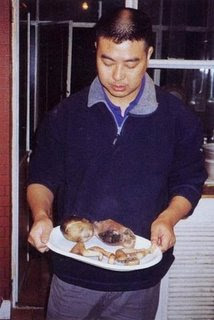
The next day the reporter returned at lunch time. The doctor eventually emerged from the operating theatre holding a fist size glass bottle stuffed with thumb sized fetuses.
She said: "There are 10 fetuses here, all aborted this morning. You can take them. We are a state hospital and don't charge anything."
"Normally, we doctors take them home to eat - all free. Since you don't look well, you can take them."
Not every state hospital is as generous with its dead embryos as the Health Centre for Women and Children. At the Shenzhen People's Hospital, for example, the reporter was in for a surprise.
When a Ms. Yang, the head nurse, was asked for fetuses, she looked anxious and asked other staff to leave. After closing the door, she asked the undercover buyer in a low voice: "Where did you (get to) know that we sell fetuses?"
The reporter answered: "A doctor friend in Hong Kong told me." "Who? What is his/her name?"The reporter was not prepared for this line of questioning and could not come up with a name. Yang told him that fetuses were only for sale within the hospital, and were not for public purchase. She added that some staff would, however, sell the fetuses on to Hong Kong buyers.
The reporter learned that the going rate for a fetus was $10 but when the merchandise was in short supply, the price could go up to $20. But these prices are pin money compared to those set by private clinics, which are said to make a fortune selling fetuses. One chap on Bong Men Lao Street charges $300 for one fetus. The person in charge of the clinic is a man in his 60's. When he saw the ailing reporter, he offered to take an order for fetuses that had reached full-term and which, it is claimed, contain the best healing properties. When a female doctor named Yang - no relation - of Sin Hua clinic was asked whether fetuses were edible, she said emphatically: "Of course they are. They are even better than placentas.
"They can make your skin smoother, your body stronger and are good for kidneys. When I was in an army hospital in Jiangti province, I often brought fetuses home. They were pink, like little mice, with hands and feet. Normally, I buy some pork to make soup (with the fetuses added). I know they are human beings, and (eating them) feels disgusting. But at that time, it was already very popular."
A Mr. Cheng from Hong Kong claims he has been eating fetus soup for more than six months. To begin, the man, in his 40's, would make the trip to Shenzhen frequently for business and was introduced to fetuses by friends. He says he met a number of professors and doctors in government hospitals who helped him buy the fetuses. "At first, I felt uncomfortable, but doctors said the substances in fetuses could help cure my asthma. I started taking them and gradually, the asthma disappeared," Cheng said.
Now, Cheng only eats fetuses occasionally to top up his treatment, but there was a time when he made regular cross border trips with the gruesome merchandise. "Everytime [I made the trip], I carried a Thermos flask to Shenzhen and brought the fetuses back to Hong Kong to make soup. If they gave me 20 or 30 at a time, I put them in the refrigerator. I didn't have the soup every day - it depended on the supply.
"Usually, I washed the fetuses clean, and added ginger, orange peel and pork to make soup. After taking it for a while, I felt a lot better and my asthma disappeared. I used to take placenta, but it was not so helpful." When asked if he was concerned about the fetuses containing diseases, Cheng was dismissive. "I bought them from government hospitals. They would check the pregnant women before doing the operations and only sell them to me if there was no problem. Also, I always boil them over high heat which kills any bacteria." Although Cheng has overcome any squeamishness over eating fetus soup, he says he draw the line at consuming whole dead embryos. He also refrains from telling people of his grisly dietary habits.
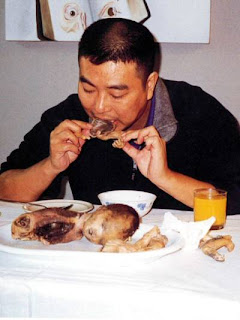
Zou Qin, 32, a woman from Hubei with the fine skin of a someone several years younger, attributes her well preserved looks to a diet of fetuses. As a doctor at the Lun Hu Clinic, Zou has carried out abortions on several hundred patients. She believes fetuses are highly nutritious and claims to have eaten more than 100 in the past six months. She pulls out a fetus specimen before a reporter and explains the selection criteria. "People normally prefer (fetuses of) young women, and even better, the first baby and a male." She adds: "They are wasted if we don't eat them. The women who receive abortions here don't want the fetuses. Also, the fetuses are already dead [when we eat them]. We don't carry out abortions just to eat the fetuses.
"Before, my sister's children were very weak. I heard that fetuses were good for your health and started taking some to my nephews," Zou says, without remorse. "I wash them with clear water until they look transparent white and then stew them. Making soup is best." But she admits there are drawbacks to this dubious delicacy. "Fetuses are very smelly and not everybody can take the stink," she said. "You can also make meat cakes by mixing fetuses with minced meat but you have to add more ginger and chives to get rid of the smell."
Hong Kong legislator Dr. Tan Siu-tong is surprised that it could be within anyone's capability to overcome the stench of a dead fetus, even if their stomachs are lined with lead. "When all the placental tissue is dead, the smell is awful and is enough to make you feel sick. It is like having a dead mouse in the house," he said.
The fetuses allegedly eaten by the Chinese are all provided by China's extensive abortion services. Last year, doctors in the People's Hospital - the biggest hospital in Shenzhen - carried out more than 7,000 terminations, 509 on Hong Kong women. The Hong Kong Family Planning Association (FPA) estimates that 24 per cent of all abortions on Hong Kong women are performed in the dubious surroundings of a Chinese hospital. A Ms. Li from Hong Kong has had two abortions in Shenzhen but has never heard of people eating fetuses. "But I didn't want the babies, so after the abortions, I just left them with the hospital," she says. "I didn't want to look at them, and I certainly didn't want to keep them. Fetuses of two or three months are just water and blood when they come out. They are so small, how can you eat them?"
Doctors in the territory have responded with disgust and incredulity to stories of people supplementing their diets with fetuses. Many have read articles of fetal cannibalism but none has been able to verify the reports. They are treating the issue with skepticism. Dr. Margaret Kwan, a gynecologist who until two weeks ago held the post of chief executive at the FPA, says: "This is the strangest thing I have ever heard coming out of China. I just hope it is not true."
Dr. Warren Lee, president of the Hong Kong Nutrition Association, is aware of the unsavory rumors. "Eating fetuses is a kind of traditional Chinese medicine and is deeply founded in Chinese folklore. In terms of nutrition, a fetus would be a good source of protein and fats, and there are minerals in bone. But I don't know if eating fetuses is just folklore or more than that," he says. According to Lee, it is conceivable that fetuses are rich in certain hormones that are beneficial to the adult human body, but should this be the case, the fetal matter would have to be converted into an injectible form for best results, as most hormones including the hormone for diabetes, insulin - are broken down in the digestive system before they have a chance to be absorbed by the body.
But Lee suggests that anyone who eats a fetus would be seeking a remedy that is far more elusive than a hormone or mineral. "Some people may think there is also an unidentified substance or chemical that has healing powers, but there is no evidence that this is true." Lee urges people to be wary - "There are people out there who just want to make money and they will come up with all sorts of formulas or substances, which, they say will cure diseases."
As a child, Patrick Yau was fed on human placentas by his mother who worked at a local hospital, but in his current position as a psychologist with the Social Welfare Department he is both repulsed and shocked by the notion of eating fetuses. "As a Catholic, I object to abortions because I believe the fetus is a human life, and I certainly object to eating a dead baby after it has been aborted," he says. Yau concedes that in China, where the one child policy has turned abortions into an acceptable remedy to an unfortunate human blunder, people may have adopted a new outlook on life before birth, such that embryos are stripped of their status as human beings.
But Tang fails to understand how anyone anywhere can convince themselves "that they are just eating an organism when they are actually eating a dead body". "It may not be a formed human being, but when they think about it most people would think: 'Ugh! No, I can't eat that.' I don't think civilized people with an education could do that sort of thing."
Dr. Wong, a Hong Kong doctor who practices Western medicine, thinks only the ignorant would eat human fetuses. He explains that fetuses contain mucoploysaccharide, which is beneficial to the metabolism, but states that it can be found in a lot of other food - Chinese doctor Chu Ho-Ting agrees that there is no place for fetuses in medicine, and suggests that it might even be unhealthy if the pregnant woman was infected by disease.
"Most bacteria can be killed under 100 degree heat but some require 400 degrees. Some people believe eating fetuses can strengthen the immunity of the human body against diseases, but this is wrong. Although fetuses contain protein, they are not as nutritious as placenta, which contains different kinds of nutrients. But even placenta has to be taken with other Chinese herbs."

|
0

MELAMINE

Posted by Renddy Rose Rodriguez on 9/26/2008 02:22:00 AM
HOT NEWS IN KOREA


Melamine Found in Chocolate Products From China

South Korea's food watchdog has detected quantities of melamine, an industrial chemical, in chocolate products from foodstuff giants Nestle SA, Mars Inc. and South Korea's Lotte that were manufactured in China, Yonhap News reported Saturday.
The Korea Food and Drug Administration (KFDA) said 2.38 parts per million (ppm) and 1.78 ppm of the toxic substance was discovered in samples of M&M's Milk and Peanut Snickers Fun Size products, respectively, from Mars Korea.
A Kit Kat bar from Nestle Korea was also found to contain 2.89 ppm of melamine, the agency said. The latest discoveries brought the number of locally tainted food items to 10 amid a broadening scandal over Chinese dairy products.
Melamine is a nitrogen-based chemical that can pose serious health risks if ingested frequently or in large quantities. It is used widely in kitchen utensils, but if added to food items the nitrogen can artificially increase protein levels, translating into higher prices.
Chinese health officials have said the use of melamine in dairy products has killed at least four infants and left 54,000 others ailing from kidney stones or other illnesses.
The KFDA is currently in the process of examining 428 processed foods manufactured in China to see whether they contain the hazardous substance. It has completed checking 288 products as of Saturday morning.

Melamine Found in Coffee Creamers, Dairy Products
President Lee Myung-bak calls for a swift action to recall all contaminated foods in his meeting with Health-Welfare Minister Jeon Jae-hee, center, and Korea Food and Drug Administration Commissioner Yun Yeo-pyo, right, during his unscheduled visit to the agency’s headquarters in Seoul, Friday.

/ Korea TimesBy Kang Shin-whoStaff ReporterAnxiety over products containing the toxic chemical melamine is growing as the contamination is also being found in coffee creamer products imported from China and a range of other milk dairy products. The Korea Food and Drug Administration (KFDA) said Friday it discovered that Yuchang F.C.’s coffee creamer imported from China was contaminated with melamine.Of the 41 tons of imported ``Vegetable Creamer Powder F25’,’’ only 16 tons have been confiscated, with the rest already distributed to fast food chains, discount stores, hotels and operators of coffee vending machines.``We’ve ordered a recall of the product and imposed a ban on the imports,’’ a KFDA official said. Melamine is a protein-rich chemical used in the production of plastics and glues. At least four infants have died in China and more than 50,000 taken ill through consuming milk powder and other dairy products containing traces of the chemical.The KFDA also banned the distribution and marketing of 304 dairy products imported from China until it completes an examination. It will disclose the list of products on its homepage (www.kfda.go.kr).The authorities ordered a recall Thursday of two contaminated snack products, ``Misarang Custard’’ sold by Haitai Confectionary and ``Milk Rusk,’’ a snack imported by J&J International from Hong Kong.Moreover, some snacks imported from China even contained cancer-causing substances, but only 1 percent of these harmful biscuits have been recalled so far, according to a KFDA report to the National Assembly. Lawmakers slammed the food agency for a lack of preemptive countermeasures in the face of growing food safety concerns.

kswho@koreatimes.co.kr


Melamine Detected in 2 More Snacks


By Kim RahnStaff Reporter


Two more snack items have been found to contain the harmful chemical melamine.


The Korea Food and Drug Administration (KFDA) said Tuesday that Ritz Bits Cracker Sandwiches Cheese, made by Navisco Food Suzhou and imported by Dongsuh Foods, and ``gosohan ssalgwaja'' (tasty rice snack), made by a Chinese company Danyang Day Bright Foods and imported by Hwatong & Babanggeu, were also found to contain melamine.


A melamine concentration of 23.3 parts-per-million (ppm) was detected in Ritz crackers, while one of 1.77 ppm was found in the rice snack.


So far six snacks have been confirmed to be tainted with the toxic chemical, including ``Misarang Coconut'' and ``Misarang Custard'' from Haitai Confectionary, ``Milk Rusk'' from J&J International, Hong Kong, and coffee creamer by Yuchang F.C.


Dongsuh and Hwatong & Babanggeu are recalling their products.


Many people are alert over the melamine-containing food items. What adds fuel to the fear includes rumors and false information about the harmful substance. Rumors are spreading fast this time again jusg as when gossip about mad cow disease was rife on the Internet in spring ahead of the nation's resumption of American beef imports.


Such rumors include: ``A person contracted kidney disease after consuming coffee creamer containing melamine,'' and ``Most animal feed imported from China contains melamine, so we should not eat chicken and pork.''


As the chemical is used to produce plastics and glues, rumors abound that when cooking with kitchenware containing melamine, the chemical melts, not only in hot water but also in cold, and thus seeps into food ― which is false information.


Many Internet users, especially mothers, ask questions such as, ``I ate the melamine-containing snack when I was five months pregnant. Is it possible that the chemical affected my baby?'' and ``Does pancake powder have melamine, too? I used to make pancakes for my boy."


However, such questions usually meet false answers, including: ``You should not give strawberry milk to children as such milk contains powdered milk,'' and ``You need to be careful in giving children bread, chocolate, dumplings and processed dried cuttlefish as they contain lactose.''


A video clip even introduces a method which the creator claims is effective ``to check whether powdered milk contains melamine or not.'' The method, however, is groundless. ``We detect melamine with special analysis machines, so people cannot detect it at home,'' a KFDA official said.


``People are advised to be careful in selecting foods, but they don't need to be excessively afraid of the chemical,'' he said.


rahnita@koreatimes.co.kr


|
0

TONGUE TWISTERS

Posted by Renddy Rose Rodriguez on 9/25/2008 05:59:00 AM


I bought a bit of baking powder and baked a batch of biscuits. I brought a big basket of biscuits back to the bakery and baked a basket of big biscuits. Then I took the big basket of biscuits and the basket of big biscuits and mixed the big biscuits with the basket of biscuits that was next to the big basket and put a bunch of biscuits from the basket into a biscuit mixer and brought the basket of biscuits and the box of mixed biscuits and the biscuit mixer to the bakery and opened a tin of sardines.


|
0

Is It Wrong to Eat Man’s Best Friend?

Posted by Renddy Rose Rodriguez on 9/25/2008 01:08:00 AM
CONVERSATION PRACTICE

As the weather gets hotter and hotter, we easily feel exhausted and pooped. Summer is a fun season, but most of us don’t really enjoy the devastating heat wave. To ward off summer heat and stay healthy, many people eat invigorating food such as Sam-gye-tang and Bo-sin-tang to boost up energy. However, controversy over eating dog meat is mounting since many people consider dog as a pet. Animal rights activists even claim that eating dogs should be banned by law. On the other hand, dog meat eaters say that there’s no problem with eating dogs because such dogs are specially breed to be eaten just like cows and pigs.

To talk about Korea’s dog eating culture, The Teen Times met up with Jenny Dodson and Fred Norman, English instructors from the U.S.

Fred: It’s really hot these days. Many Koreans eat dog meat to fight the strong summer heat wave. What do you think about it?

Jenny: I think it’s very
barbaric and inhumane to eat dogs. I mean, they are our friends, not a source of food! As a dog lover, I don’t think it’s right to eat them. There are many other nutritious foods that can pump you up in summer!

Fred: Well, I love dogs, too. But I also love eating them. Before I came to Korea, I also thought it’s very wrong to eat them, but now I understand it’s just a cultural difference. You know, different cultures have different animals they have traditionally raised for food. There is no difference with raising dogs, cows, cats, rabbits, pigs, horses, or any other animal for food purposes.

Jenny: But
unlike beef, pork or chicken, dog meat has no legal status as food in Korea. So, the slaughtering process has gone underground with no official guidelines to guarantee hygiene and animal welfare. I heard some people kill dogs in very cruel ways. They beat them to death or hang them to death to make the flesh softer. Maybe this is why eating dog is considered wrong or inferior. Just thinking about it makes me creep all over!

Fred: Well, eating dogs is neither wrong nor inferior, Jenny. Of course, I
condemn all inhumane treatment of any animal being raised for food such as the practice of beating, burning or hanging the animals whether they are dogs, cows or pigs. Many people take the totally incorrect view that eating dog meat is wrong because most cultures view the dog as a pet. But Koreans don’t eat pet dogs, of course. They raise certain breeds of dogs for food. In fact, dog meat is considered as an alternative source of meat in some cultures.

Jenny: I still don’t understand. They can eat other
livestock such as cows, chickens and pigs. But dogs are different. They are not food.

Fred: Are you a
vegetarian, Jenny? If you aren’t, I guess you eat pork, beef and chicken. So, what’s the difference between them and dogs?

Jenny: But the dog is man’s best friend. There are other good sources of
protein other than dog meat. You don’t need to eat dogs to stay healthy.

Fred: People
tend to react emotionally from their own cultural bias. You see, in some countries, eating pork is prohibited and in other countries, eating beef is banned because cows are considered as sacred animals. Listen, Jenny. It’s just cultural differences, but not wrong. You see, there are cultures that drink blood from their live horses as a primary nutrition source. This is also different, but not wrong or inferior. Why don’t you respect other cultures’ choices?

Jenny: Well, I guess you’re right. Actually I heard people in North Carolina and Spain enjoy eating the rabbit. Also, my friend from England said
hare is a delicacy there. Although I’m still not going to eat dog meat, now I understand it’s a cultural difference. And I’m glad to know that Bo-sin-tang is made from a specific breed of dog that differs from those breeds that are kept as pets! But still, there are some problems to solve such as inhumane practices and hygiene problems.

Fred: Right. I think dog meat should be
legalized in Korea so that only authorized preparers can deal with the meat in more humane and sanitary ways.


VOCABULARY BANK

exhaust
verb tire out completely; use up (resources or reserves) completely
pooped
• Extremely tired
devastating
adjective extremely distressing or shocking.

ward off

• prevent ; turn aside
invigorate
verb give strength or energy to.

boost
verb help or encourage to increase or improve.
controversy
noun debate or disagreement about a matter which arouses strongly contrasting opinions.
claim
noun a statement that something is the case; a demand for something considered one’s due.
banned
verb officially prohibit.
barbaric
adjective savagely cruel, brutal, rude
inhumane
adjective without compassion for misery or suffering; cruel.
nutritious
adjective full of nutrients; nourishing.
unlike
preposition different from; not like; in contrast to.
slaughter
noun the killing of farm animals for food; the killing of a large number of people in a cruel or violent way.
underground
adjective beneath the surface of the ground.
guideline
noun a general rule, principle, or piece of advice.
guarantee
noun a formal assurance that certain conditions will be fulfilled; something that makes an outcome certain.
hygiene
noun conditions or practices that help to maintain health and prevent disease, especially cleanliness.
creepy
adjective causing an unpleasant feeling of fear or unease.
condemn
verb express complete disapproval of.
breed
noun a distinctive type within a species of animals or plants, especially one deliberately developed; a sort or kind.
alternative
noun one of two or more available possibilities.
livestock
noun farm animals regarded as an asset.
vegetarian
noun a person who does not eat meat for moral, religious, or health reasons.
protein
noun any of a class of organic compounds forming structural components of body tissues and constituting an important part of the diet.
tend
verb go or move in a particular direction.
react
verb respond to something in a particular way.
emotional
adjective arousing or showing emotion; easily affected by or readily displaying emotion.
bias
noun inclination or prejudice in favour of a particular person, thing, or viewpoint.
sacred
adjective holy; embodying the doctrines of a religion.
primary
adjective of chief importance; principal; earliest in time or order.
hare
noun a fast-running, long-eared mammal resembling a large rabbit, with very long hind legs.
delicacy
noun a choice or expensive food.
solve
verb find an answer to, explanation for, or way of dealing with (a problem or mystery). l

legalize
verb have (a document) legalized by a notary.
authorize
verb give official permission for or approval to.
deal
noun an agreement between two or more parties for their mutual benefit.
sanitary
adjective relating to sanitation; hygienic.


|
0

Seoul Observes Car Free Day

Posted by Renddy Rose Rodriguez on 9/23/2008 06:52:00 AM
Only buses leisurely run on Jongno street in central Seoul which is normally crowded with cars during rush hours, Monday, the World Car Free Day. The campaign was simultaneously observed in about 2,000 cities in 40 countries across the world. / YonhapBy Na Jeong-juStaff ReporterPresident Lee Myung-bak rode a bicycle to work and Seoul's mass transit firms offered free rides to commuters during morning rush hours Monday as the city participated in World Car Free Day.Seoul closed public parking lots and blocked major roads in downtown areas to ``offer fresh air and jam-free streets'' to citizens.The city government spent millions of dollars to promote the day, but many still drove their cars to work, causing backups in central Seoul.

``President Lee and all Cheong Wa Dae staff refrained from using cars throughout the day,'' a presidential spokesman said. ``Lee arrived in his office on a bicycle while his secretaries took buses and subway trains.''Lee and his secretaries used a mini-van to get to Seoul Station and then a train to attend an event in Daejeon.Performances were held on the car-free streets.``Today, I took the subway for free and enjoyed fun events for free,'' said Lee Mi-jung, 23, who works at a shop in Jongno, central Seoul.
``Some people complain about the inconvenience, but it is meaningful to have this kind of day to raise public awareness about environmental protection.''The car-free day was simultaneously observed in 2,000 cities in 40 countries.
The campaign was created by the World Car Free Network, an organization dedicated to promoting alternatives to car dependence and automobile-based planning at the international level.The inaugural event was held in France in 1997 and was established as a Europe-wide initiative by the European Commission in 2000. It has since gone global.

|
0

Multitasking, Not Always the Best Choice

Posted by Renddy Rose Rodriguez on 9/23/2008 06:21:00 AM


Contrary to the common belief, multi-tasking is not the answer to accomplishing more things in a fixed amount of time. Rather than dealing with stress, it's time to switch back to an emphasis on doing one thing at a time and doing it well. It's possible to be productive, effective, and stress free by a disciplined approach to what you do and when you do it. Effective leaders make sure they are working on high priority tasks - the tasks are such that others can't do them, and they don't waste time. Adapt these techniques to be productive and stress-free.

Awareness: As with any life change, an important first step is awareness. For one week, keep a log of everything you do in a day and how long each task takes.

Prioritize: A key to stress free productivity is to work on important tasks to the exclusion of lesser tasks. Review the log of activities and identify those tasks producing the greatest benefit.

Avoid Interruptions: Interruptions are your enemy. Some interruptions are unavoidable, but not as many as you might think. For starters, don't allow self initiated interruptions, such as checking email or voicemail. Establish interruption-free periods of the day when you'll focus on the most important tasks and avoid email, phone calls, and in-person interruptions.

Establish Processes: Anything you do that is routine is a candidate for a highly efficient process. Trim unnecessary steps from routines and look for ways to automate, outsource, or delegate.

Empower Others: What do you do that others in the family or at work could do and would be willing to do? We often tend to underestimate the capability of others, seeing them as they were in earlier years when they were inexperienced and dependent. Practice these techniques, and you'll find yourself completing your tasks with lower stress, higher quality, and greater satisfaction.
VOCABULARY BANK

contrary

adjective opposite in nature, direction, or meaning.
productive
adjective achieving or producing a significant amount or result
discipline
noun controlled behavior resulting from such training; train in obedience or self-control by punishment or imposing rules.
priority
noun a thing regarded as more important than others.
adapt
verb become adjusted to new conditions.
log
noun an official record of events.
exclude
verb deny access to; keep out; remove from consideration.
identify
verb establish the identity.
interrupt
verb stop the continuous progress of; stop (a person who is speaking) by saying or doing something.
unavoidable
adjective not able to be avoided or prevented; inevitable.
automate
verb convert (a process or facility) to operation by automatic equipment
outsource
verb obtain by contract from an outside supplier.
delegate
noun a person sent to represent others, in particular at a conference; a member of a committee.
empower
verb give authority or power to; give strength and confidence to.
underestimate
verb regard (someone) as less capable than they really are.
inexperience
• noun lack of experience.

|
0

This Fall Is Expected to Be Clear and Mild

Posted by Renddy Rose Rodriguez on 9/23/2008 05:50:00 AM


According to the Korea Meteorological Administration (KMA)기상청, this fall is likely to be clear and mild. "Though summer saw frequent sudden downpours as well as heat waves, the weather in autumn will be clear and dry with large differences between morning and evening temperatures - a typical Korean autumn,"said Lee Man-je, head of the KMA.


The temperature is expected to be slightly higher than last year’s 8-19 degrees Celsius in September. High atmospheric pressure from the North Pacific will affect the Korean peninsula, bringing clear and mild weather.


October will see even drier and clearer days with the early morning and daytime temperature differences widening further. There will be some chilly days and the mountainous areas of Gangwo-do and Gyungsangbuk-do are likely to experience frost.

In November, there will be some cold days due to continental high atmospheric pressure. However, the weather will still be dry and mild. But the west coast and Gangwon-do could see some snow.

Also, one typhoon is likely to hit the peninsula. The KMA said there will be 9-10 typhoons in the northwestern part of the Pacific Ocean, one of which will affect Korea.

|
0

Table Manners From Around the World

Posted by Renddy Rose Rodriguez on 9/23/2008 04:31:00 AM

Our world is comprised of a great number of countries, an array of cultures and rich traditions. No two countries have the same customs which makes our world very wonderful, though perhaps also confusing . Well, confusing in what way? Have you ever traveled to a foreign country and been unsure of the customs and proper etiquette ? If you've ever been a stranger in another country, you may have found yourself embarrassed at times if you were unfamiliar with the local rules and customs. What is normal in one country may be viewed as totally disgusting in another country. Let's explore some table manners and etiquette from around the world!


While eating meals, Koreans use chopsticks and a spoon. Most Western countries use a fork and knife at the dinner table. But have you ever given thought to which hand to use while you eat?

In India, people traditionally don't use any cutlery while eating their meals. If done correctly, eating with your hands is a technique that is not as messy as it may seem. In northern India, the food should only be touched with your fingertips , and is considered rude if it touches anywhere above the knuckles of your hand. Indians believe that eating with a clean hand is much more hygienic than eating with a fork or chopsticks. It is also believed that the diner can pay closer attention to the food and enjoy the meal more if they use their hands.

Let's now take a look at American dining etiquette. In America, it is considered very rude using your hands to eat, unless it is some type of finger-food such as pizza, chicken fingers or bread. It is stressed in American culture that you should not chew with your mouth open, nor talk while there is food in your mouth. Americans also think it is very rude if you rest your elbows on the table while eating a meal. Most Americans think it is important to wait until everyone is served before you start eating your meal. Lastly, if you don't finish everything on your plate, it is often a sign that you did not particularly like the food.

In France, adding condiments to a dish before even tasting it may be really insulting to the chef . Many French believe that condiments hide the taste of the meal. While eating in France, it is always polite to have both of your hands visible at all times. In French restaurants, it is often common for ladies to sit in the chairs with their backs to the wall, while men sit in chairs that face the ladies and the wall. When you've finished eating a meal in France, put your knife and fork on the plate together in the middle.

It may seem extremely confusing trying to remember all of the different customs and proper etiquette while eating. But if you ever get the chance to eat in a foreign country, don't be too nervous because you may just lose your appetite. People will most likely understand that you are from a different country and are unaware of their table manners. Perhaps they'll even try to teach you the customs of their country, and you can return the favor by teaching them some from Korea!
VOCABULARY BANK

array
noun an impressive display or range of a particular thing.
etiquette
noun the code of polite behavior in a society.
unfamiliar
adjective not having knowledge or experience of.
disgusting
adjective arousing revulsion or strong indignation.
cutlery
noun knives, forks, and spoons used for eating or serving food.
technique
noun a way of carrying out a particular task, a procedure that is effective in achieving an aim.
messy
adjective untidy or dirty.
knuckle
noun a part of a finger at a joint where the bone is near the surface
hygienic
adjective promoting or conducive to hygiene; sanitary.
condiment
noun a seasoning or relish for food, such as salt or mustard.
insult
verb /insult/ speak to or treat with disrespect or abuse.
chef
noun a professional cook, especially the chief cook in a restaurant or hotel.
visible
adjective able to be seen or noticed.
extreme
adjective to the highest degree; very great; highly unusual; exceptional.
unaware
adjective having no knowledge of a situation or fact.
favor
noun approval or liking; an act of kindness beyond what is due or usual.

|
0

Starting a Presentation

Posted by Renddy Rose Rodriguez on 9/22/2008 04:49:00 AM
In modern English, Presentations tend to be much less formal than they were even twenty years ago. Most audience these days prefer a relatively informal approach. However, there is a certain structure to the opening of a Presentation that you should observe.


Get people's attention
· If I could have everybody's attention.
· If we can start.
· Perhaps we should begin?
· Let's get started.

Welcome them
· Welcome to Microsoft.
· Thank you for coming today.
· Good morning, ladies and gentlemen.
· On behalf of Intel, I'd like to welcome you.

Introduce yourself
· My name's Jane Shaw. I'm responsible for travel arrangements.
· For those of you who don't know me, my name's Tom Stotter.
· As you know, I'm in charge of public relations.
· I'm the new Marketing Manager.

State the purpose of your presentation
· This morning I'd like to present our new processor.
· Today I'd like to discuss our failures in the Japanese market and suggest a new approach.
· This afternoon, I'd like to report on my study into the German market.
· What I want to do this morning is to talk to you about our new mobile telephone system.
· What I want to do is to tell you about our successes and failures in introducing new working patterns.
· What I want to do is to show you how we've made our first successful steps in the potentially huge Chinese market.
State how you want to deal with questions.
· If you have any questions, I'll be happy to answer them as we go along.
· Feel free to ask any questions.
· Perhaps we can leave any questions you have until the end?
· There will be plenty of time for questions at the end.

Of course, these are only suggestions and other language is possible. Even within this limited group of phrases, just choose a few you feel comfortable with and learn and use those.

|
0

COMMON MISTAKES IN ENGLISH

Posted by Renddy Rose Rodriguez on 9/18/2008 01:20:00 AM
Plans / A Plan

“Do you have any plans for the weekend?” is a very common North American phrase that you’re very likely to hear on any given Friday. “Plan” is always used in the plural (“plans”), and this expression means “What are you going to do this weekend?”

“Do you have a plan?” is used for when you have a specific goal in mind, and never to just ask about what someone is going to do during a certain time.

A: I am going to start a business.
B: What is your plan?
A: I will open a restaurant that sells the world’s best hamburgers.

Wrong: Do you have a plan for tonight?
Right: Do you have any plans for tonight.

Wrong: Do you have any plan for the weekend?
Right: Do you have any plans for the weekend?

…are you planning.. ...“What are you planning to do this weekend?” has the same meaning as “Do you have any plans for the weekend?” You can also use “…are you planning…” interchangeably with “Do you have a plan…?”, but need to add ‘on +verb-ing’ after planning to indicate the goal.

Ex. Are you planning to steal that girl away from her boyfriend?
Are you planning anything special for this weekend?

Partner / Keypal Activities- Do you have any plans this weekend?

|
0

Idioms- International List

Posted by Renddy Rose Rodriguez on 9/18/2008 01:20:00 AM
IDIOMS

1. A phrase that must be taken as a whole, usually having a meaning that is not clear from the meaning of the individual words, as hang around and a change of heart.
2. The use of particular words or of words in an order that is regarded as standard, the idiom is "wash up the dishes" but not "wash up your hands."
3. The language used by a people or group, in the scientific idiom.
4. a characteristic mode of expression in art or music etc.

Source: Oxford American Dictionary

idiom: To hang loose
meaning: To relax, to wait without anxiety, to take it easy in general.
usage: I got anxious waiting for her to call back, but I decided to just hang loose.

idiom: To get someone's drift.
meaning: To understand what someone is saying.
usage:
example 1:
A: Do you understand what I'm saying?
B: Yes. I get your drift.Example
2:A: Do you understand what I mean?
B: No, I'm sorry. I don't get your drift.

idiom: To screw up.
meaning: To make a mistake.
usage: I really screwed up.

idiom: To have egg on your face.
meaning: To feel embarrassed about something you have done.
usage: Oh no! I screwed up. I sure have egg on my face.

idiom: To bite the big one
meaning: to make a major mistake
usage: Sally really knows how to bite the big one.

idiom: to space-out, to feel spaced-out
meaning: To forget something, to be absent minded, to daydream
usage:
1) I couldn't sleep last night so I feel spaced out.
2) Sorry, what did you say? I just spaced out.
3) I'm feeling spacey today.

|
0

Dog Meat

Posted by Renddy Rose Rodriguez on 9/18/2008 01:20:00 AM
Koreans - Killing & Eating Dogs

Did you know that in Korea there is a practice of killing dogs for food. Dog meat is touted as being a substance which can boost the sexual prowess of men. The fact that this theory is absolutely false, makes no difference. A profitable commerce has been established.

The eating of dogs for food is not a new controversy for South Korea, as this photo from 1988 indicates. The photo originally accompanied a story on dog meat sales by The Sun's Lorrie Goldstein during the 1988 Seoul Olympics. The government banned the killing of dogs for food, in locations frequented by visitors, during the Olympics. They were afraid of upsetting Westerners visiting their country.

The Koreans who eat these poor dogs, take great delight in watching the poor animals die, wagging their tails in a last moment's desperate, but futile plea for mercy. It is believed the more the dog suffers in death, the better tasting the meat! Slow hanging and burning the hair off with propane torches is common practice. Cats receive equal treatment, shoved into sacs which are then smashed against brick walls until the poor animals are pulverized. Then they are liquified in blender machines and sold as drinks.

Something to Think About!
Dogs and man have been living together, helping each other, for more than 30,000 years according to anthropoligists. That represents about 1000 generations. Geneticists believe the figure is closer to 100,000 years.

They were dangerous times, 30,000 years ago. Man's weapons for hunting and protection were primitive and enemies were everywhere, two legged and four. Often, a dog's warning of danger was how a man survived. If a dog saved the life of its master 30,000 years ago, then all descendants of that man, also owe their existence to that dog. Supose a man had two children in each generation and that there have been 1000 generations since that time, it means that 2 to the power of 1000 or 21000 would represent the number of people today, who owe their existence to that dog. That number, 21000 is a number greater than all the people who have ever lived! Saving its master's life was common place until fairly recent times. In the last 300 years St. Bernards alone, have been credited with saving over 3000 people from snow avalanches in Europe. Think about how many people today owe their existence to those St. Bernards. Newfoundland Dogs, better not forget them, because over the decades they have saved countless children, adults, and shipwrecked mariners from drowning. It doesn't take a genius to figure that every man and woman on the face of this earth probably owes his/her existence to some dog, way back. Don't you think that dogs have earned special protected status, worldwide.

WHAT IS YOUR OPINION ABOUT THIS ARTICLE?

THIS ARTICLE IS CREATED BY:
http://www.dogbiz.com/dont-eat-dog-meat.htm

|

Copyright © 2009 English Lessons All rights reserved. Theme by Laptop Geek. | Bloggerized by FalconHive.