0
Buying Beauty
Posted by Renddy Rose Rodriguez
on
12/07/2008 10:06:00 PM
 Plastic Surgery and the Beauty Myth
There's no doubt about it: Korea is a cosmetic surgeon's paradise. In the more affluent areas of the country, it seems like there are cosmetic surgery clinics in nearly every office building. Almost everyone has a friend or relative who has had some part of their body nipped, tucked, tweaked, or otherwise changed. Cosmetic surgery has become so common, in fact, that it is virtually a non-issue. Someone could announce they are considering cosmetic surgery with the same nonchalance with which they'd tell people they are going to the dentist, and no one would bat an eye.
But who can blame people, really? Who wouldn't want to look younger, thinner, and prettier? A quick trip to clinic and you can get rid of those extra kilograms on your lunch hour, have those heavy calves thinned, or get the same nose or jaw-line as your favorite celebrity. It can all be yours through the miracle of plastic surgery.
Statistics show that at least one in ten women have had some kind of cosmetic surgery, and the number of men seeking to boost their ego is no less notable. People often say that getting cosmetic surgery will help them feel more confident about themselves. There are stories of women having surgery for the sole purpose of an interview, and some mothers, even suggest that their daughters do so—all of this, in the name of beauty.
This phenomenon also exists in other countries. In the United States, nearly 6.9 million cosmetic surgery procedures were performed in 2002, a number that has increased 228% since 1997.
Plastic surgeons claim that they do their best when they evaluate a prospective patient to see whether their perception of the likely results of surgery is realistic or if there is an underlying emotional problem behind the need for the surgery. Because of very low self-esteem, some individuals may have very distorted ideas about what they look like. They may be obsessively preoccupied with a perceived defect in their physical appearance even if others reassure them they look fine.
However, since a plastic surgery clinic is a business like any other, it is unlikely that as many potential clients get refused as should be.
There are, however, some very good reasons to undergo plastic surgery. Some people want to look younger so they can get or keep a job. Appearance may not matter for a college professor or a scientist, but in certain jobs it does matter and plastic surgery can help. Others may have features that are unusually large or small, or misshapen, attracting unwanted attention and making them feel continually self-conscious.
Comprehension:
1. A recent survey in a Korean publication stated that about one in ten Korean women have had some kind of cosmetic surgery. Does this sound accurate? How many people that you know have had cosmetic surgery of some kind?
2. Would you consider having cosmetic surgery? What would you change about yourself?
3. What kinds of cosmetic surgery are most popular? Why?
4. In Korea, as many other Asian countries, cosmetic surgery is widely accepted whereas in many Western countries, it is not. How can you account for this difference?
5. What do you think of the people who have cosmetic surgery?
6. Do you think people who have cosmetic surgery are truly happier about themselves? Do they feel more confident?
7. How would you feel if your spouse or partner wanted to have an expensive cosmetic surgery procedure? What would you do if you didn't actually agree that she needed it? What could she do instead?
8. What are the most some serious side effects associated with plastic surgery procedures? Do you know of any 'botched jobs'?
9. Is it really possible to improve your self-esteem through cosmetics or, does real self-esteem come from inside?
|


 Explain how you would react to the following situations. Focus on describing how you might feel in case and how you would respond.


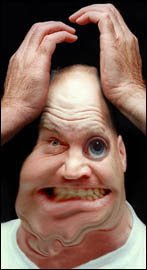 There’s no doubt about it: stress is one of the most common features of modern life. While it’s true that in the past, people were stressed too, the distinct characteristic of modern life, and what gives people these days even more tension than their ancestors is life’s complexity. When you think about it, the sheer number of choices facing people on a daily basis is jarring. From marriage and children careers and hobbies, we have more choices facing us than we can sometimes handle. The result is stress. So, how stressed are you? Care to know? Have a look at the following simple stress test to get an idea.